
Fabrice Pancrate’s Newcastle Dream Ended Almost as Soon as It Began
The former PSG forward finally got his move to England, made an instant impact at Newcastle, and looked set for the Premier League. Then the call never came.
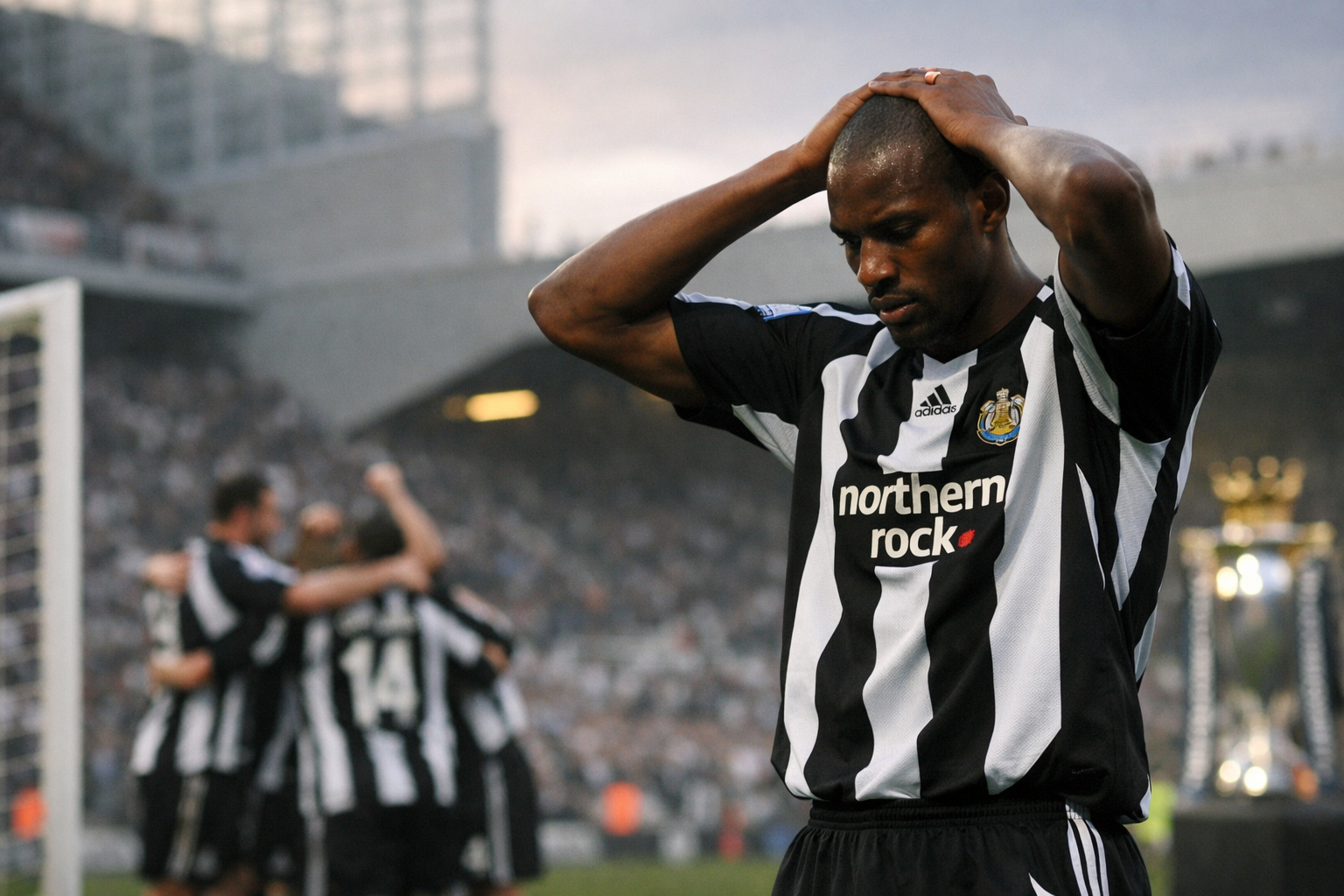
Fabrice Pancrate’s career always carried the feel of a player chasing big moments rather than easy paths. For the forward from the Paris area, one ambition had already been fulfilled when he signed for Paris Saint-Germain. The second came later, when he finally moved to England and joined Newcastle United.
For a brief stretch, that English chapter looked like it might become one of the best stories of his career. Instead, it turned into one of the hardest setbacks he had to absorb.
From Villepinte to PSG
Pancrate was born in the Paris region and grew up in Villepinte, in Seine-Saint-Denis. After developing through the system at Louhans-Cuiseaux, he began to attract wider attention with Le Mans during the 2003-04 season.
He was not a classic penalty-box striker in the narrow sense. Pancrate offered power, direct running, and enough technical ability to operate in different attacking roles. That versatility helped convince Vahid Halilhodzic and PSG to bring him in for a reported fee of around €3 million.
Joining PSG was more than a transfer. For Pancrate, it was personal. Representing the club he had dreamed about as a boy meant he had already reached one of the landmarks many players never touch.
His time in Paris, from 2005 to 2009, did not turn him into a headline star, but it gave him a meaningful place in the squad during a turbulent period for the club. Often used as a supporting attacking option under coaches such as Guy Lacombe and Paul Le Guen, he made 132 appearances and scored 14 goals.
One of those goals came in the Champions League, even if the night itself was painful for PSG. Pancrate scored in a 3-1 defeat to CSKA Moscow, a game remembered more for Sergey Semak’s hat-trick than for the Frenchman’s contribution. Still, it was a European goal for PSG, and that is not a detail many former players can casually claim.
A long-awaited move to England
When his contract in Paris came to an end, Pancrate had another target in mind: English football.
For many players of his generation, England represented a different kind of stage — louder, faster, more physical, and full of atmosphere. Pancrate wanted that experience for himself. He reportedly turned down Burnley, who were in the Premier League at the time, and instead chose Newcastle United.
On paper, that may have looked unusual. Newcastle were not in the top flight then; they were pushing for promotion out of the Championship. But the size of the club mattered. So did the stadium, the support, and the sense that if promotion was achieved, he would be part of a major institution returning to where it believed it belonged.
He arrived in November with Newcastle leading the division. The squad had quality and personality: Kevin Nolan was among the key goal threats, Andy Carroll was emerging, Fabricio Coloccini wore the captain’s armband, and Alan Smith was trying to reinvent himself in midfield.
Pancrate stepped into that environment hoping not just to help with the run-in, but to earn a future in the Premier League.
The perfect start at St James’ Park
It did not take long for him to make an impression.
In only his second appearance for Newcastle, Pancrate scored a brilliant goal against Watford. He beat two defenders and then unleashed a fierce strike from the left side, sending St James’ Park into full voice. For a new signing trying to establish himself, it was just about the perfect opening statement.
Everything about the moment suggested possibility. A big club, an electric crowd, a memorable goal, and a player who looked as though he had found a setting that suited him.
Even in a squad loaded with promotion expectations, Pancrate seemed capable of carving out a real place. He brought athleticism and flexibility, and in a relentless Championship season those qualities often matter as much as star quality.
Across the campaign, he made eight starts and a further 11 substitute appearances. He was involved, useful, and part of a side that ultimately got the job done.
From Pancrate’s point of view, the next step felt obvious. Newcastle were going up. He had contributed. He had shown flashes of quality. The expectation was that the club would keep him on and give him the chance to experience the Premier League in black and white.
Promotion for Newcastle, heartbreak for Pancrate
That is not what happened.
As the season moved into its decisive final phase, manager Chris Hughton used Pancrate less and less. Newcastle still surged toward promotion, powered in part by the goals of Nolan and Carroll, who both finished with 17. But Pancrate’s own momentum faded at exactly the wrong time.
Then came the blow: Newcastle chose not to trigger the option to extend his stay.
For the player, it was a crushing outcome. The dream move to England had happened. The club had won promotion. The Premier League was within touching distance. Yet just as the door seemed ready to open, it closed.
Pancrate did not hide his disappointment. He spoke openly about how difficult it was to accept leaving a club he had grown to love in such a short time. He described Newcastle as the best club of his career and praised the supporters in glowing terms, making it clear that the emotional attachment had become real.
That is what made the ending sting even more. This was not a loan spell or short contract he viewed with indifference. He wanted to stay.
Newcastle moved on quickly
Football rarely pauses for sentiment, and Newcastle were already looking ahead.
Not long after Pancrate’s exit, the club turned again to the French market and brought in Hatem Ben Arfa on loan from Marseille. The symbolism was hard to miss. One French attacker left disappointed; another arrived carrying the excitement of a fresh project.
For Pancrate, the timing deepened the sense that his chance in England had slipped away before he could fully grasp it.
The move also reflected a truth about clubs emerging from the Championship. Promotion changes the frame immediately. Useful contributors in the second tier are not always viewed as part of the plan for the Premier League. Recruitment becomes more ambitious, and decisions can be ruthless.
Pancrate found himself on the wrong side of that transition.
A difficult aftermath, then a steady revival
The emotional impact of the Newcastle setback was followed by a practical one. Pancrate spent seven months without a club after leaving England, an unusually long and uncertain stretch for a player still trying to stay relevant.
Eventually, he joined AEL Larissa in Greece, taking the route many professionals do after a disappointing exit from a major league: reset, rebuild, and keep going.
He did exactly that.
Later in his career, Pancrate returned to France and signed with Nantes, where he spent time from 2011 to 2014. That period allowed him to reestablish some rhythm and finish on steadier ground. He was particularly effective in Ligue 2 and scored 10 goals in 68 appearances for the club.
It may not have been the glamorous ending imagined during his PSG years or during that exhilarating start at Newcastle, but it was respectable. More importantly, it showed resilience.
Why Pancrate’s Newcastle spell is still remembered
Pancrate’s time at Newcastle was brief, and in raw numbers it was not huge. But it remains a memorable episode because of how sharply it rose and fell.
There was the appeal of the club itself, one of England’s most emotional football institutions. There was the stunning early goal that made supporters sit up. There was the shared sense that a player from the outskirts of Paris had finally arrived at the English adventure he had wanted.
And then there was the abrupt ending, with promotion secured but no place reserved for him in the top flight.
For some players, disappointment comes through failure on the pitch. Pancrate’s was different. He had the feeling of being close enough to touch the next level, only to watch it move away because the club’s plans changed.
That is often the cruelest version of football: not when the dream is impossible, but when it seems to be happening and still disappears.
A career of fulfilled ambitions — and one painful near miss
Looking back, Pancrate still achieved plenty. He played for PSG, the club he wanted as a young player. He experienced English football at a famous stadium with one of the country’s loudest fanbases. He scored memorable goals and built a respectable professional career across France, England, and Greece.
But his Newcastle spell remains the chapter colored most by what might have been.
For one moment, he had everything lined up: a big club, a promotion push, a connection with supporters, and the possibility of reaching the Premier League. Instead of becoming the beginning of a new phase, it became one of the game’s familiar hard lessons.
Pancrate got the move he dreamed about. He just did not get the ending he wanted.