
How Celtic’s bid for a historic 10th straight title unraveled as Rangers reclaimed the crown
Celtic entered the season chasing a record-breaking tenth league title in a row, but a year of poor decisions, flat performances and growing instability opened the door for Rangers to end the streak.
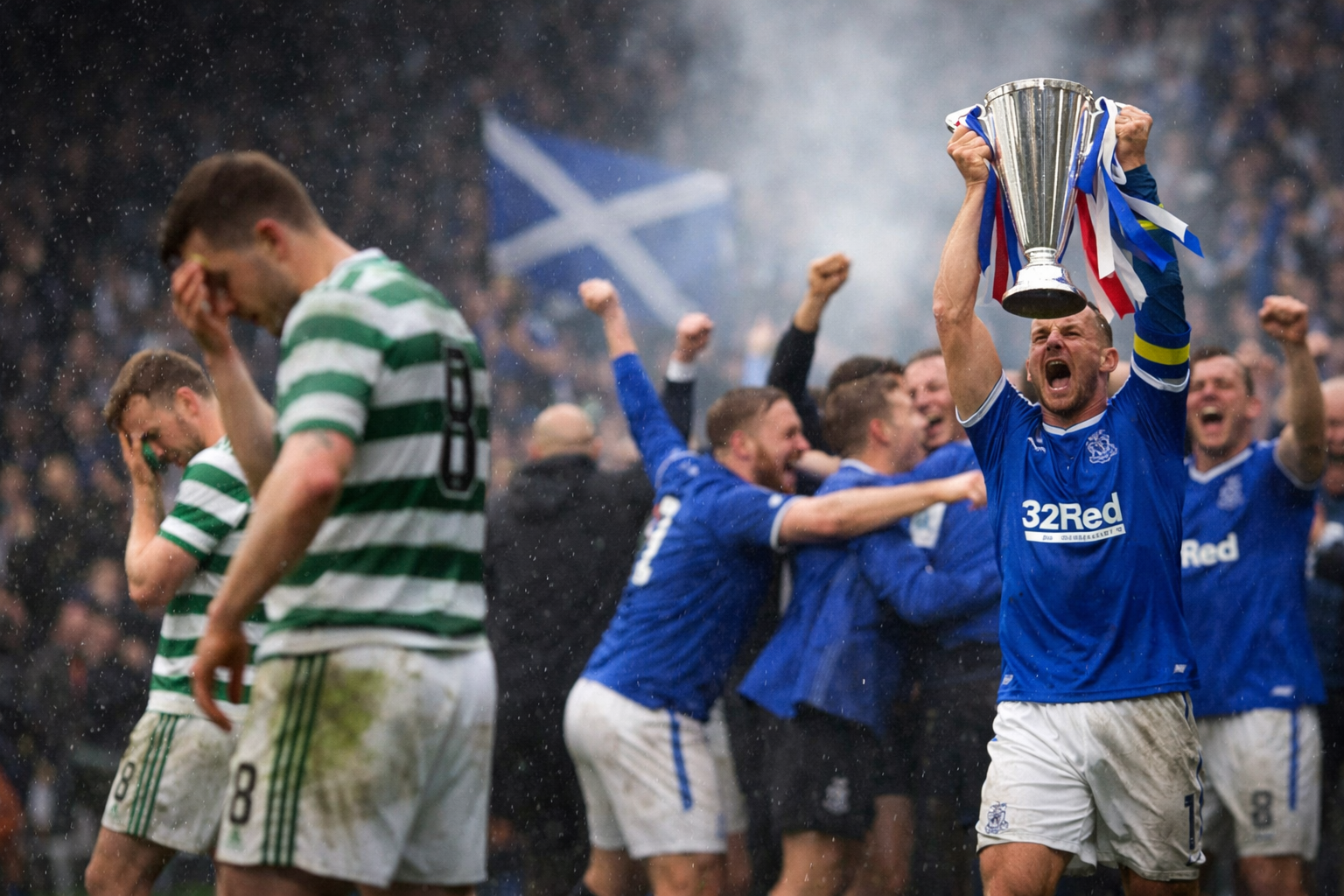
Celtic began the season with a clear mission: win a 10th consecutive league title and complete a feat neither they nor Rangers had ever managed before. Instead of making history, they watched their biggest rivals celebrate.
When Celtic’s draw with Dundee United confirmed Rangers as champions, it marked the end of one of the most dominant eras in modern Scottish football. Celtic had owned the league for nearly a decade, collecting title after title and building the kind of domestic control few clubs in Europe can sustain. But by the spring, that authority had evaporated.
Rangers’ title win was not simply the story of one club improving. It was also the story of Celtic slipping, hesitating and failing to react as warning signs piled up.
A decade of control comes to a halt
For years, Celtic had set the pace in Scotland. Since the 2011/12 campaign, they had turned domestic success into routine, stacking nine straight league titles alongside multiple Scottish Cup and League Cup triumphs. The club’s latest objective was obvious: turn nine in a row into 10 and move beyond Rangers in one of the most symbolic races in Scottish football.
That target shaped the mood around the season. Among supporters, there was not just optimism but expectation. A squad that had delivered silverware consistently was supposed to finish the job.
Instead, the campaign drifted almost from the start. By the time Rangers wrapped up their 55th league championship, Celtic were left to confront a collapse that felt both sudden and long in the making.
Neil Lennon’s second spell lost momentum
Much of the attention inevitably fell on Neil Lennon. His place in Celtic history is secure. As a player, he was central to important title wins and was part of the side that previously prevented Rangers from reaching 10 in a row. As a manager, he delivered trophies and preserved his status as a club figure deeply tied to Celtic’s modern identity.
That history bought him time, but it could not shield him forever.
Lennon’s strengths have often been framed around personality, intensity and an ability to drive standards in the dressing room. At his best, he brought energy and conviction. But this season exposed the limitations that critics had pointed to before. As results dipped, Celtic looked short of tactical clarity and increasingly unable to correct repeated mistakes.
The failures mounted quickly. There was disappointment in Europe, where the club again fell short of the Champions League group stage and then exited the Europa League earlier than expected. Domestic cup setbacks added to the frustration. More importantly, league performances lacked consistency, urgency and control.
By the winter, the mood had turned sharply. Lennon remained in place while Celtic slipped further behind Rangers, and that delay only increased the sense that the club was reacting too slowly to an obvious crisis.
When he eventually resigned in February, Celtic were already well off the pace.
A club accused of standing still
One of the more striking criticisms from supporters was not only that Celtic played poorly, but that they failed to use key moments to reset and improve.
The view from many fans was that, after the previous season’s interruption, Rangers returned better prepared and more focused, while Celtic seemed to assume their recent dominance would continue automatically. That perception became central to the postmortem.
Rather than acting like a team about to defend a historic streak, Celtic often looked like a side coasting on old standards. The accusation was blunt: Rangers planned for the challenge ahead, while Celtic did not show the same edge.
That contrast was visible on the pitch. Rangers appeared organized, driven and difficult to shake. Celtic, by comparison, looked disjointed and vulnerable, with too many underperforming players and not enough leadership in key moments.
Recruitment and squad issues added to the decline
It would be too simple to place the entire season on the manager alone. Celtic’s problems ran deeper.
Recruitment did not deliver the impact required. Although money was spent, the return on those additions was questioned heavily. Several signings failed to raise the level of the side, and the balance of the squad never felt fully convincing.
At a club where the demand is immediate success, that matters quickly. When top performers dip at the same time that new arrivals fail to push the team forward, the standard can collapse faster than expected.
The board’s handling of the season also came under scrutiny. There were questions over long-term planning, over whether Lennon had been properly supported in the right way, and over whether key decisions were delayed because of sentiment and stability concerns.
Those concerns grew louder as Rangers built momentum under Steven Gerrard. While Celtic wrestled with uncertainty, Rangers looked like a team moving in a straight line.
Why this season felt bigger than a normal title loss
Losing a league title is painful for any major club. Losing it to a fierce rival is another level entirely.
In Glasgow, the rivalry between Celtic and Rangers is about far more than the table. It carries generations of social, political and cultural tension, which is why shifts in power resonate so strongly. A title race between the two clubs is never just sporting competition; it is tied to identity, pride and control of the city’s football landscape.
That is why this failure hit Celtic supporters so hard. This was not only the loss of a championship. It was the loss of a historic chance, and it came with Rangers ending the run.
The emotional weight of that combination turned disappointment into something closer to humiliation for many fans. Celtic were trying to complete a record that would have elevated this era even further. Instead, Rangers claimed the landmark moment for themselves by stopping it.
Echoes of a darker period
For some observers, the campaign raised uncomfortable memories of Celtic’s struggles in the 1990s, when the club went through a significant decline and lost its usual place at the summit of Scottish football.
The current situation is not identical, especially financially, but the fear comes from the same place: what happens when a dominant club ignores signs of drift?
Celtic’s modern success has often made them seem almost untouchable domestically. Yet history shows that decline can come quickly if major structural issues are left unresolved. In the 1990s, the club experienced instability both on and off the pitch, and it took years to fully recover.
That is why this title loss felt like more than a bad season. It raised broader questions about recruitment, leadership, succession planning and the overall direction of the club.
Major change now feels unavoidable
The timing of the collapse only increased the sense that a reset was coming. Lennon’s departure forced a managerial rethink, with John Kennedy stepping in on an interim basis. At the same time, long-serving chief executive Peter Lawwell was also heading toward the end of his tenure.
Taken together, those changes suggested a club entering a new phase.
The next permanent managerial appointment will carry huge weight. Celtic can choose continuity, or they can use this moment to make a more decisive break from the habits that contributed to the collapse. Either way, the choice will reveal a great deal about the club’s ambition and self-awareness.
The squad, too, may need significant work. Rangers now have the confidence of champions, a settled framework and the momentum that comes from ending Celtic’s reign. Celtic must respond with more than emotion. They need clarity, better recruitment and a sharper competitive edge.
Rangers took the opening and never let go
As much as Celtic’s failures defined the season, Rangers deserve credit for turning opportunity into a title. Gerrard’s side combined consistency with discipline and looked like a group built for a sustained challenge. Where Celtic lost control, Rangers applied pressure every week.
That relentlessness decided the race.
For Celtic, the lesson is harsh but clear. Domestic dominance can create the illusion that success will keep repeating itself. In reality, every season has to be rebuilt from scratch. Rangers understood that. Celtic did not.
A campaign that was supposed to end with history instead finished with a warning. The club that had spent years on top now faces a far more difficult task: proving that this was one collapse, not the beginning of a deeper slide.