
How ÍA Akranes Built an Icelandic Soccer Dynasty From a Town of 8,000
From breaking Reykjavik’s hold on the Icelandic title to producing one of the game’s most improbable championship runs, ÍA Akranes remains one of soccer’s great small-town stories.
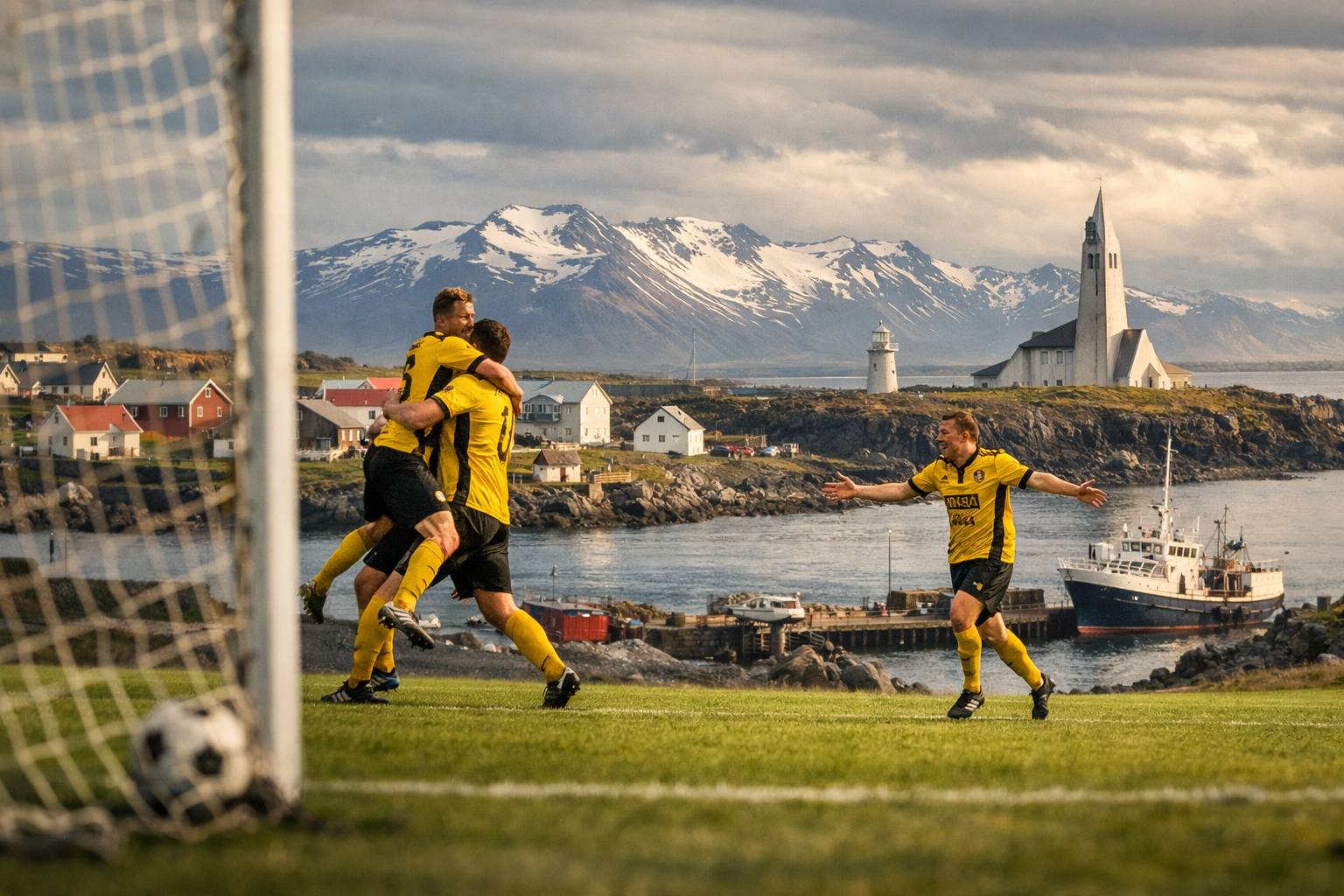
Akranes is easy to overlook on a map. The town sits just north of Reykjavik on Iceland’s west coast, a small fishing community of roughly 8,000 people pressed against the sea. Trawlers and harbor life still define much of the local landscape. But in Icelandic soccer, Akranes carries a weight far beyond its size.
That is because of Íþróttabandalag Akraness, better known as ÍA, a club that spent decades proving that geography and population do not always decide who gets to rule a league.
For long stretches of the 20th century, Icelandic football was shaped by the power centers of Reykjavik. Clubs from the capital dominated the top division and set the sport’s hierarchy. Then ÍA broke through. In 1951, the club became the first side from outside Reykjavik to win the Icelandic championship, a landmark achievement that changed the country’s football map.
What followed was even more striking. Between 1951 and 1990, no Icelandic club matched ÍA’s domestic success. Their rise was driven in large part by the influence of Ríkharður Jónsson, a towering figure who served the club as a player and manager and became central to its identity.
Even now, that bond between club, town and family remains one of ÍA’s defining traits.
Sigrún Ríkharðsdóttir, Jónsson’s daughter, has spent a lifetime following the team and remains one of its most passionate supporters. Her son, Ríkharður Árnason, works in the club’s media operation. In Akranes, football history is not stored away in archives. It lives inside families.
Relegation that changed everything
By the end of the 1980s, though, ÍA’s old standard had begun to slip. Despite winning league titles and cups during the decade, the club dropped out of the top flight in 1990 for only the second time in its history.
The decline was painful, but it also exposed a squad in transition. A number of the players carrying ÍA at that point were very young, including future national-team names such as Haraldur Ingólfsson, Sigursteinn Gíslason and teenage forward Arnar Gunnlaugsson.
The relegation fed a familiar argument from the capital: that Akranes had overachieved for too long and was finally being pulled back into line by the traditional order of Icelandic football.
Instead, the fall became the start of a new era.
ÍA turned to one of their own, Guðjón Þórðarson, to lead the rebuild. A club great as a player, Þórðarson had already made a name for himself as a coach with innovative methods centered on conditioning, discipline and structure. His reputation had grown after taking KA Akureyri to a historic title, and his return to Akranes gave the club exactly the kind of authority and clarity it needed.
He inherited a talented but raw group and quickly began shaping it into something harder, fitter and mentally tougher.
The foundations of a comeback
The 1991 second-division campaign was not prolonged suffering. It was a statement.
ÍA stormed back toward the top flight, winning 14 of 18 matches, scoring 55 goals and conceding only 12. Þórðarson had tightened the team and added key pieces, including defender Ólafur Adolfsson, Yugoslav center-back Luka Kostić and young goalkeeper Kristján Finnbogason.
That spine gave the side balance. The defense became mean and organized. The younger players gained confidence. Promotion was secured immediately.
Still, few outside Akranes imagined what would happen next.
Reykjavik’s leading clubs, especially Fram and Valur, were still expected to control the title race. ÍA had only just returned. On paper, they looked too inexperienced to challenge for the championship right away.
But before the 1992 season, the club received another major lift. Sigurður Jónsson, one of Iceland’s most gifted midfielders, returned home after his career abroad was interrupted by injury. Though still only 25, he brought quality, calm and authority to a side already growing in belief.
The result was immediate and historic. ÍA won the 1992 league title in their first season back in the top division.
The five-title miracle
Winning the league after promotion is unusual, but not unheard of. What ÍA did next pushed the story into a different category.
They did not stop at one title. They won five in a row.
From 1992 through 1996, ÍA Akranes dominated Icelandic soccer with a consistency that felt almost impossible given the scale of the town and the resources available to the club. In a domestic game where Reykjavik clubs had greater pull and, in some cases, stronger finances, ÍA kept finding ways to stay ahead.
Continuity was a major reason.
The core of the squad remained together. Many of the players who had gone down and come back up matured together instead of being scattered. The club kept a strong collective identity, and that stability became a competitive edge. Sigrún Ríkharðsdóttir has pointed to exactly that when reflecting on the run: the same players stayed, developed and learned how to win together.
The team’s style also mattered. Usually set up in a 4-4-2, ÍA combined physical strength with discipline and relentless running. They were well-drilled, hard to break and emotionally resilient. Just as importantly, they had quality in attack.
In 1993, they were even more dominant than during their title-winning return the year before. They finished nine points clear at the top, hammered opponents regularly and conceded only 12 goals all season. Þórður Guðjónsson led the scoring charts, while Haraldur Ingólfsson added further attacking thrust.
Even when disruption arrived, the title habit remained.
Þórðarson left for rivals KR before the 1994 season, and KR also took Finnbogason back with them. It looked like an attempt to weaken the champions and shift the balance of power back toward Reykjavik. But ÍA still won the league again. Their system, belief and player base were strong enough to survive major changes.
Under Logi Ólafsson in 1995, they took another title, with Arnar Gunnlaugsson ending the campaign as the league’s top scorer. Then came the dramatic finale in 1996, when Þórðarson returned and guided ÍA to a fifth straight championship.
That last title remains one of the most memorable. KR entered the final day needing only a draw at Akranesvöllur to become champions. ÍA needed to win. They responded by beating their rivals 4-1 and overturning the race in the season’s final act.
For a club built on nerve and togetherness, it was a fitting climax.
A family club in the truest sense
Plenty of teams like to market themselves as family clubs. ÍA lived it.
One of the most remarkable details of that 1990s side was how interconnected the squad was. Sons of former players, brothers, cousins, nephews and even a grandson all featured within the wider team structure. In a town like Akranes, football lines often run directly through family trees.
That local concentration of talent gave ÍA something many bigger clubs struggle to build: a deeply shared identity.
Akranes has produced an extraordinary number of players for such a small place. By 2021, the town had sent 38 players into professional football abroad, a remarkable figure when measured against its population. Among the standout generation were Arnar Gunnlaugsson, Þórður Guðjónsson and Lárus Orri Sigurðsson, all products of the town who later moved into bigger leagues.
That production line helped sustain ÍA’s success and reinforced the sense that this was more than a good team. It was a football culture.
Why the dynasty faded
No run lasts forever.
After the 1996 league and cup double, ÍA remained competitive, finishing second in 1997, third in 1998 and winning another title in 2001. But the grip loosened. The conditions that had once allowed a small-town club to outmuscle the capital became harder to preserve.
Players left, either for clubs abroad or for better-funded domestic rivals. Financial realities began to bite harder. European competition, now a major source of income for clubs across the continent, had not been nearly as lucrative during ÍA’s peak years. Their appearances in continental qualifiers brought prestige, but not the kind of money that could permanently transform the club’s position.
As Icelandic football became more connected to wider markets, that imbalance grew. Reykjavik clubs could attract stronger imports, while Akranes increasingly saw its best young players move on sooner.
The club has still had moments since then, including an Icelandic Cup win in 2003 and a runners-up finish in 2021, but the long wait for another league title has stretched into a defining frustration for a place with such a proud history.
Why ÍA still matters
ÍA’s story endures because it captures something soccer rarely holds onto for long: the idea that a small town, bound by loyalty and local talent, can repeatedly upset the natural order.
This was not a one-season surprise or a lucky run. It was a dynasty built from coaching vision, family continuity, hard development work and a player pool that seemed to regenerate from the same streets and surnames.
Modern football makes that sort of sustained rise harder to repeat. Money spreads unevenly. Talent leaves earlier. Competitive edges disappear faster. Yet Akranes still occupies a special place in Icelandic soccer because it once turned those limitations into strengths.
That is why ÍA remains more than a historic club. It is a reminder that football’s map does not always belong to the biggest city, the richest team or the loudest institution.
Sometimes it belongs to a fishing town on the west coast, where nearly everyone seems connected, and where the yellow-and-black past still feels close enough to return.